Infrastructure Development in Dholera SIR

Key Highlights
Infrastructure development in Dholera SIR includes internal roads, underground utilities, water and wastewater treatment, stormwater drainage, power networks, fibre connectivity and smart-city management systems. Much of the initial trunk infrastructure is concentrated within the 22.54 sq. km Dholera Activation Area.
Dholera follows an infrastructure-first development model. Roads, utilities and essential city systems are developed before large-scale industrial and residential occupation, creating the basic infrastructure needed for future growth.
What Infrastructure Has Been Developed in Dholera SIR?
Dholera SIR infrastructure includes:
- Internal roads and underground utility corridors
- Water treatment and distribution
- Sewage treatment
- Industrial wastewater treatment
- Recycled-water systems
- Stormwater drainage
- Power transmission and distribution
- Fibre and ICT networks
- CCTV and smart-city monitoring
- Plug-and-play infrastructure for industries
These systems form the basic physical, utility and digital infrastructure required for industrial and urban development.
Dholera Activation Area Infrastructure
The 22.54 sq. km Activation Area is the first major development zone within Dholera SIR. NICDC states that the area is almost complete, with major trunk infrastructure already in place.
The area includes industrial, commercial, residential and public-use zones supported by roads, underground utilities, water, drainage, power and digital infrastructure.
It provides the first large-scale example of how infrastructure across the wider Dholera SIR is intended to function.
Roads and Underground Utilities in Dholera
Around 72 km of roads and underground services have been developed within the Activation Area.
Dholera's road network has been planned together with underground utility corridors carrying services such as:
- Electricity
- Potable water
- Recycled water
- Sewage
- Drainage
- Fibre and communication networks
Keeping major utilities underground helps reduce repeated road excavation and allows different services to be planned as part of one organised infrastructure network.
Water Supply Infrastructure
A reliable water network is essential for industries, businesses and future residential areas. Dholera's initial water infrastructure includes a 50 MLD Water Treatment Plant (WTP) along with a planned distribution network for treated water.
The city also includes recycled-water infrastructure so treated wastewater can be reused for suitable non-drinking requirements.
Sewage and Industrial Wastewater Infrastructure
Dholera has separate infrastructure for domestic sewage and industrial wastewater.
Major facilities include:
- 10 MLD Sewage Treatment Plant (STP)
- 20 MLD Common Effluent Treatment Plant (CETP)
- Recycled-water infrastructure
- Underground sewage networks
The STP is designed to treat domestic wastewater, while the CETP is intended to manage industrial effluent.
Separating these systems is important in an industrial city because residential sewage and industrial wastewater have different treatment requirements.
Stormwater and Flood Management
Stormwater management was included in Dholera's infrastructure planning from the beginning.
The system includes underground box drains, open canals and other drainage infrastructure designed to carry rainwater and reduce the risk of waterlogging.
Flood management planning also includes canal and river-related infrastructure.
Building drainage systems alongside roads and utilities allows stormwater management to become part of the city's basic infrastructure rather than being added after development.
Power Infrastructure
Reliable power infrastructure is essential for manufacturing, commercial activity and future residential development in Dholera.
Power transmission and distribution networks form part of the planned utility infrastructure within the developed areas.
For industries, this means electricity infrastructure can be available as part of the wider industrial ecosystem rather than every company having to create basic supporting infrastructure independently.
ICT and Smart City Infrastructure
Dholera also includes digital infrastructure for monitoring and managing city services.
Key systems include:
- Fibre-optic connectivity
- CCTV networks
- Data infrastructure
- E-governance systems
- ICT-based monitoring
- Integrated city-management systems
The ABCD Building - Administrative and Business Centre for Dholera supports administrative and smart-city operations, including systems used to monitor and manage urban infrastructure.
This digital layer helps different city services operate through connected systems.
Plug and Play Infrastructure for Industries
One of the main objectives of Dholera infrastructure development is to provide industries with easier access to essential services.
Industrial plots in developed areas can benefit from infrastructure such as:
- Roads
- Electricity
- Water
- Drainage
- Wastewater systems
- Digital connectivity
This is commonly described as plug-and-play infrastructure.
The objective is to reduce the amount of basic infrastructure that manufacturers need to develop independently before starting their projects.
Why is Dholera's Infrastructure Model Different?
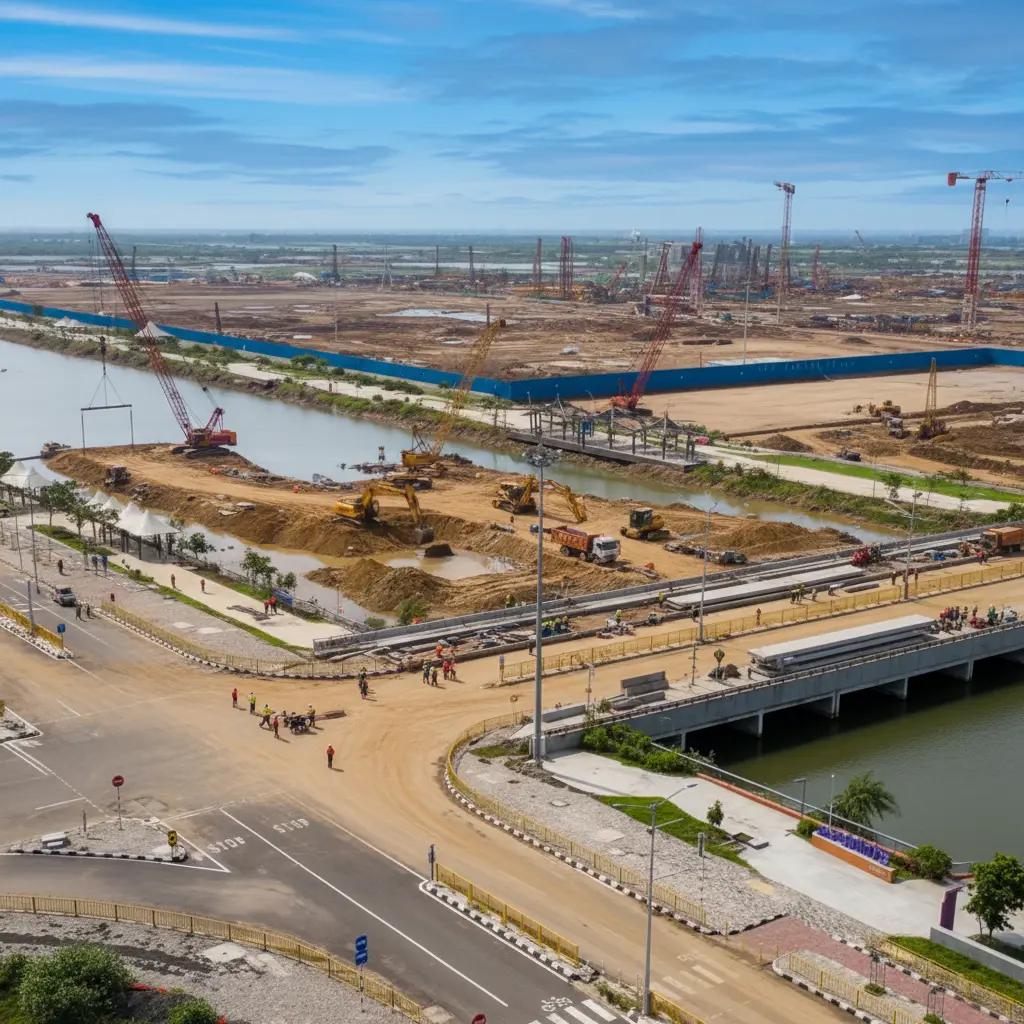
The main difference is the order of development.
In many existing cities, roads, drainage and utilities are expanded after population and construction increase. Dholera is developing major infrastructure before large-scale occupation.
Its infrastructure can be understood in three main layers:
Physical infrastructure: Roads, drainage and underground utility corridors.
Utility infrastructure: Water, recycled water, sewage, industrial wastewater treatment and power.
Digital infrastructure: Fibre networks, ICT, CCTV and smart-city management systems.
Regional transport projects then connect this internal infrastructure with Ahmedabad and other economic centres.
Together, these systems create the foundation required for long-term industrial and urban development in Dholera SIR.
FAQs
Q. Is Dholera infrastructure completed?
No. Dholera SIR is being developed in phases. Major trunk infrastructure is already in place across much of the 22.54 sq. km Activation Area, while development across the wider Dholera SIR will continue in phases.
Q. What infrastructure is available in Dholera?
Dholera infrastructure includes roads, underground utilities, water treatment, sewage treatment, industrial effluent treatment, recycled-water systems, stormwater drainage, power networks, fibre connectivity and smart-city management systems.
Q. Does Dholera have underground utilities?
Yes. Underground utility corridors form part of Dholera's planned infrastructure and support services such as electricity, potable water, recycled water, sewage, drainage and communication networks.
Q. How is wastewater treated in Dholera?
Dholera has separate infrastructure for domestic and industrial wastewater. The initial infrastructure includes a 10 MLD Sewage Treatment Plant for domestic sewage and a 20 MLD Common Effluent Treatment Plant for industrial wastewater.


