Gujarat SemiConnect Conference 2026 Begins: What It Means for Dholera Smart City

Key Highlights
The Gujarat SemiConnect Conference 2026 has officially commenced at Mahatma Mandir Convention and Exhibition Centre, reinforcing Gujarat’s ambition to emerge as the country’s leading semiconductor hub. The two-day global summit brings together policymakers, global chipmakers, and technology leaders to accelerateand strengthen the national deep-tech ecosystem.
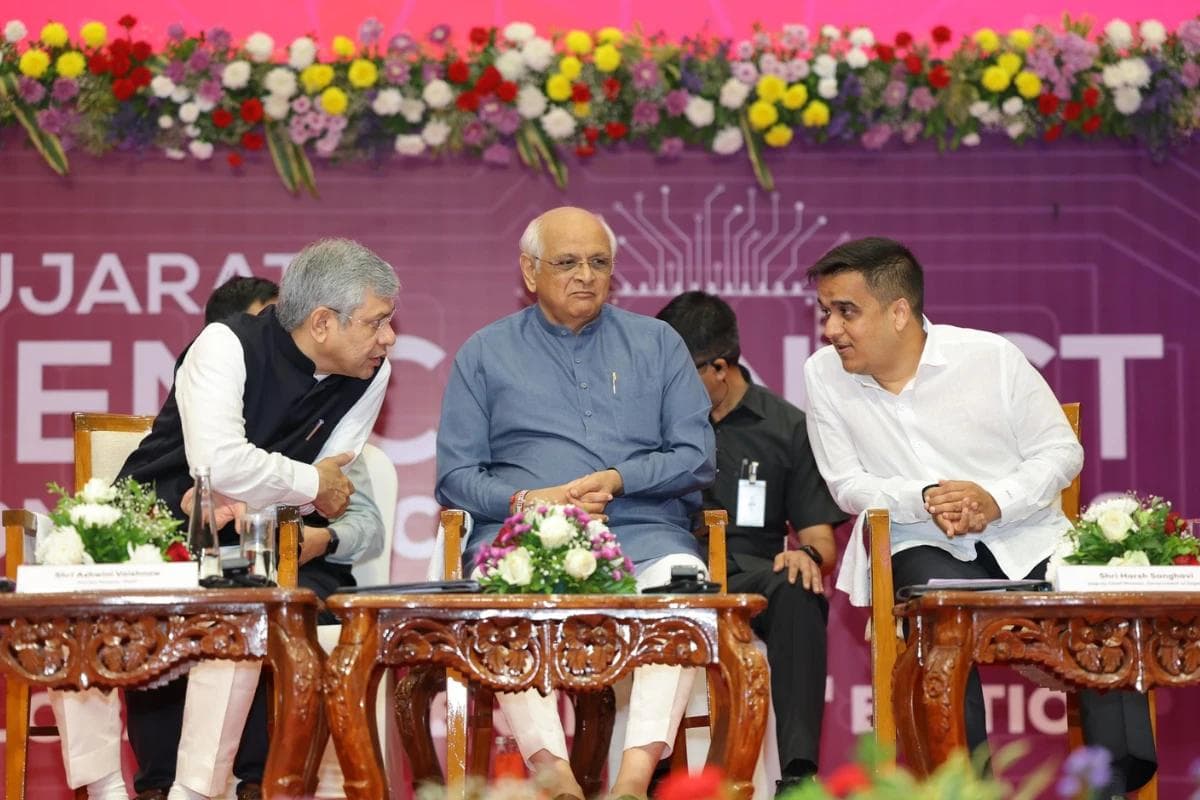
With Ashwini Vaishnaw and Bhupendra Patel leading the inaugural session, the conference signals a clear shift from planning to ecosystem execution. Notably, Dholera SIR was highlighted as the emerging “Semicon City of India,” drawing strong attention from investors and industry stakeholders.
India Semiconductor Manufacturing Enters the Next Phase
At the conference, Minister Ashwini Vaishnaw emphasized that the combined power of artificial intelligence, semiconductors, and electronics manufacturing will drive India’s next wave of exponential growth.
Key developments highlighted:
- India has secured multiple investments for semiconductor manufacturing
- The first facility is almost ready to function in Dholera
- Additional plants are expected to become operational in the upcoming years
- The focus is shifting from planning to full-scale production
This messaging indicates that semiconductor manufacturing in India is moving beyond policy announcements toward tangible industrial capacity.
Semicon 2.0 Focus: Building a Complete Semiconductor Ecosystem
A major theme at the summit is Semicon 2.0, which prioritizes localization of the entire semiconductor value chain rather than isolated fabrication units.
Key ecosystem priorities
- Deep-tech startup development
- Semiconductor equipment ecosystem
- Supply chain localization
- Design-to-manufacturing integration
- Global collaboration with countries like Japan and Taiwan
This approach is critical for strengthening the India semiconductor industry and reducing dependence on imports.
New STI Policy to Strengthen Research and Innovation
During the inaugural session, the Gujarat government unveiled the Science, Technology & Innovation (STI) Policy 2026-31, aimed at accelerating advanced technology development across the state.
Policy focus areas
- Indigenous research acceleration
- Frontier technology development
- Large-scale STEM talent nurturing
- Innovation cluster creation across Gujarat
- Intellectual property ecosystem expansion
The policy also proposes the creation of Gujarat Rajya Research & Innovation Clusters, beginning with the Gandhinagar-Ahmedabad region and expanding statewide. This move supports long-term infrastructure development and knowledge-driven industrial growth.
Enrichment Update: Key Announcements from Gujarat SemiConnect 2026
The Gujarat SemiConnect Conference 2026 is being held under the theme “Gujarat: India’s Gateway to Silicon,” reinforcing the state’s ambition to become the country’s primary semiconductor and deep-tech hub.
Plant Progress Signals Execution Momentum
According to Union Minister Ashwini Vaishnaw, India has already secured 10 semiconductor manufacturing plants. Importantly, production at the first semiconductor facility has begun, and three additional plants are expected to become operational by the end of 2026. This marks a significant shift from policy planning toward real manufacturing capacity in India semiconductor manufacturing.
GRRIC Network to Expand Across Gujarat
Under the new STI Policy, the state will establish Gujarat Rajya Research & Innovation Clusters (GRRIC) to build a statewide innovation network. The rollout will begin with:
- Gandhinagar-Ahmedabad-Dholera SIR region
- Vadodara-Surat corridor
- Rajkot-Bhavnagar-Junagadh-Jamnagar belt
This cluster-based model is designed to strengthen regional infrastructure development and create a distributed innovation ecosystem supporting the India semiconductor industry.
Major Talent and Research Push by 2030
The policy sets an ambitious human-capital roadmap:
- Target to nurture 1,00,000 skilled researchers by 2030
- Around 250 annual JRF/SRF/PDF fellowships
- Dedicated Women in Innovation Fellowships
- Large-scale STEM engagement programs for youth
- Over 200 IP Facilitation Centres planned
- Target of 1,000+ IP filings annually, including at least 500 patents
These initiatives aim to build the long-term talent pipeline required for sustainable semiconductor manufacturing in India.
“From Silicon to Students” Workforce Focus
Conference sessions also highlighted workforce development through initiatives such as “From Silicon to Students,” which focuses on aligning academic talent with industry needs. This approach is expected to support emerging hubs like Dholera SIR, where large-scale semiconductor and electronics manufacturing ecosystems are being planned.
High-Level Presence Underscores Policy Priority
The inaugural session was attended by Gujarat Chief Minister Bhupendra Patel, Deputy Chief Minister Harsh Sanghavi, and Science & Technology Minister Arjun Modhwadia, reflecting strong state-level commitment to advancing the semiconductor and innovation ecosystem.
Dholera Smart City Gains Strategic Spotlight
One of the most significant takeaways from the event is the strong positioning of Dholera Smart City project within India’s semiconductor roadmap.
Dholera was recognized for its:
- Plug-and-play infrastructure readiness
- Reliable power and utility framework
- Large contiguous industrial land parcels
- Integration with the Delhi Mumbai Industrial Corridor (DMIC)
- Long-term master planning vision
The activation area Dholera is already witnessing rapid dholera sir infra development, making it a natural destination for semiconductor and electronics manufacturing investments.
Strong Industry Participation Signals Confidence
The conference has attracted major global and domestic players, including Tata Electronics, Micron Technology, Kaynes Semicon, and CG Semi.
This level of participation indicates:
- Growing global confidence in India’s chip ambitions
- Strengthening of the Gujarat semiconductor ecosystem
- Rising interest in hubs like Dholera and Sanand
- Expanding opportunities in semiconductor equipment and supply chains
The presence of international delegations from Japan and Taiwan further reinforces India’s integration into global semiconductor networks.
Connectivity and Infrastructure Supporting Industrial Growth
The success of semiconductor hubs depends heavily on regional connectivity and logistics. Projects like the Ahmedabad Dholera expressway and the upcoming Dholera International Airport are expected to significantly improve access to the region.
Combined with the Delhi Mumbai Industrial Corridor, these developments strengthen:
- Industrial mobility
- Export logistics
- Workforce movement
- Investor confidence
This integrated approach is central to sustaining long-term industrial growth in the region.
What This Means for Investors and the Future of Dholera
The broader message from Gujarat SemiConnect 2026 is clear: India is building a full semiconductor ecosystem, and Gujarat particularly Dholera is positioned at the heart of this transformation.
For those tracking Dholera Smart City progress, the signals are significant:
- Policy support is strengthening
- Infrastructure is advancing
- Global industry participation is rising
- Semiconductor manufacturing momentum is building
As the Dholera Smart city current status continues to evolve, the region is increasingly being viewed not just as a planned smart city but as a future deep-tech and manufacturing hub.
Frequently Asked Questions
Q. Why is Gujarat SemiConnect 2026 important for Dholera Smart City?
A. Gujarat SemiConnect Conference 2026 is a major semiconductor event that highlights Gujarat’s push to become a leading chip and deep-tech hub, with Dholera Smart City getting strong attention.
Q. Why is Dholera Smart City important in Gujarat SemiConnect Conference 2026?
A. Dholera Smart City is important because it was highlighted as an emerging semiconductor hub with plug-and-play infrastructure, industrial land, and DMIC-linked growth potential.
Q. Can Gujarat SemiConnect 2026 increase interest in Dholera investment?
A. Yes. The conference strengthens the Dholera investment story by showing policy support, semiconductor momentum, and rising industry confidence in the region.
Q. What should buyers check before buying plots in Dholera after such semiconductor updates?
A. Buyers should check location, road access, NA/NOC, clear title documentation, approvals, and registry process before buying plots in Dholera.
Q. Can long-term buyers find premium plotted options in Dholera?
A. Yes. Buyers can explore WestWyn Estates by BookMyAssets, which offers premium residential plots in Polarpur, Dholera, with access from State Highway-117 and a location positioned for long-term holding potential.


