Nagase & Nippon Express Partner for India’s Semiconductor Growth in Dholera

Key Highlights
India is steadily building its semiconductor manufacturing base, and Dholera Special Investment Region (SIR) is emerging as a key location in this journey. A major development supporting this growth is the collaboration between Nagase & Co. and Nippon Express, focused on strengthening the supply chain needed for semiconductor manufacturing in India.
Nagase will source and supply critical semiconductor materials, while Nippon Express helps in logistics - from transportation to specialized warehousing - to support global Tata Semiconductor India. This collaboration supports the goals of the India Semiconductor Mission, which aims to build a complete and reliable semiconductor ecosystem in the country.
Instead of focusing only on fabrication plants, the partnership addresses a crucial need: how sensitive materials move safely, on time, and at scale to semiconductor facilities.
Why Logistics Is Critical for Semiconductor Manufacturing
Semiconductor production depends on precision, safety, and timing. Any disruption in material supply can slow down operations. The Nagase–Nippon Express partnership helps manage this complexity by focusing on:
- Safe transportation of high-purity semiconductor materials
- Secure and temperature-controlled warehousing
- Smooth coordination between global suppliers and Indian manufacturers
- Supply systems that meet global quality standards
These capabilities are increasingly important as the electronics and semiconductor manufacturing industry in India continues to grow.
Supporting the Tata Semiconductor Fab in Dholera
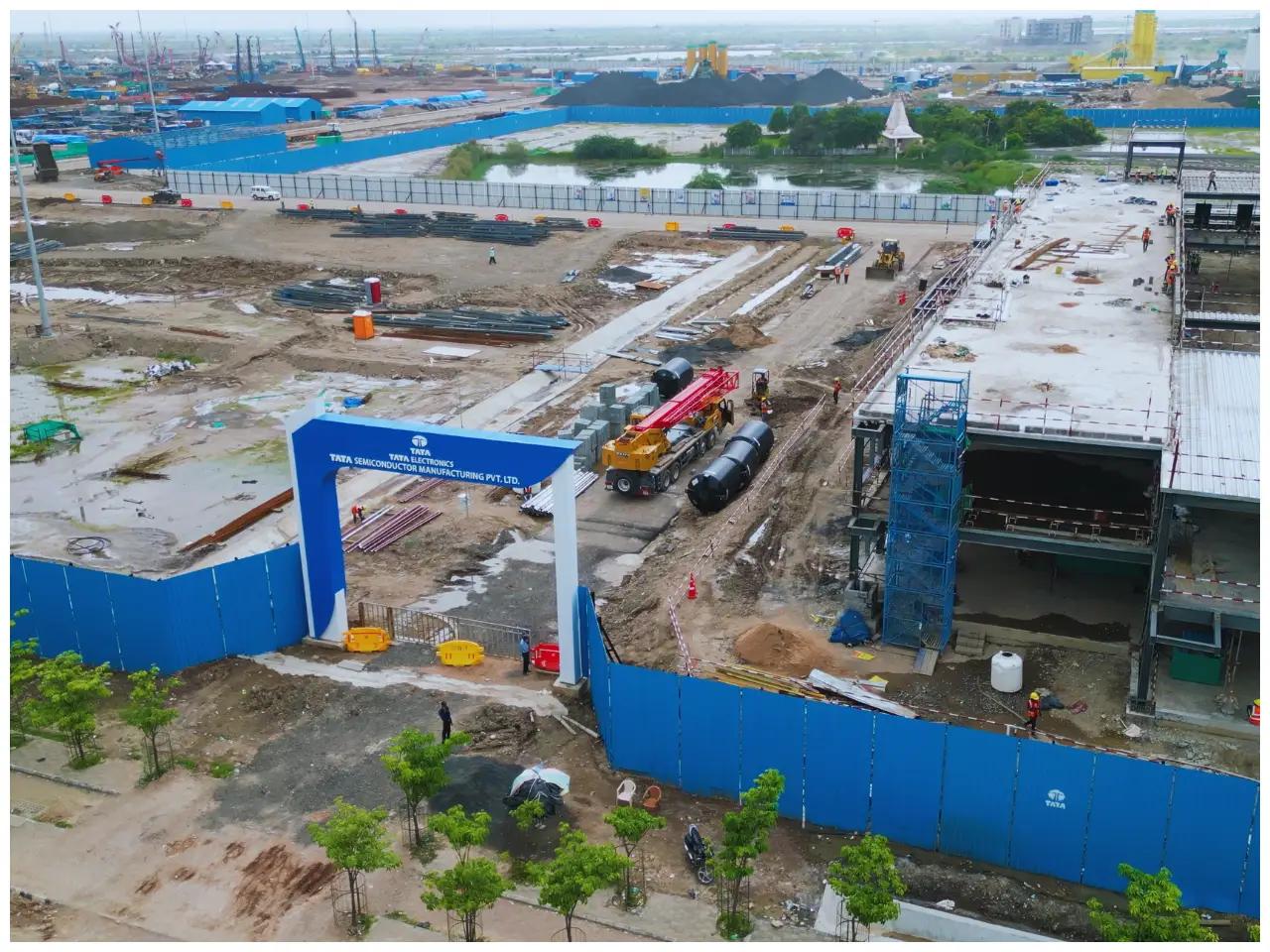
Dholera SIR is one of the most important regions under the India Semiconductor Mission, anchored by the upcoming Tata semiconductor fab being developed by Tata Electronics. This project represents a major step forward for the India semiconductor industry, moving toward domestic chip production.
As the Tata Electronics semiconductor facility progresses, dependable material sourcing and logistics support become critical. The Nagase–Nippon Express collaboration plays a key role in ensuring uninterrupted supply to the fab.
Infrastructure Driving Dholera’s Industrial Growth
Dholera’s strength lies in its integrated, future-ready infrastructure. Several developments are improving its attractiveness for advanced manufacturing:
- Ahmedabad–Dholera Expressway enabling faster connectivity
- The upcoming Dholera International Airportwill support cargo and executive movement
- Reliable utilities are planned under the Dholera Smart City project
- Large-scale upcoming projects in Dholera across electronics, logistics, and manufacturing
Together, these factors support industrial development in India and sustained industrial growth in India.
Clean Energy Advantage: Dholera Solar Park
A key differentiator for Dholera is its access to sustainable power. The Dholera Solar Park, one of India’s largest planned solar projects, is designed to provide stable and clean energy for industries.
For energy-intensive sectors like semiconductors, reliable green power supports long-term operations and aligns with global sustainability goals, strengthening Dholera’s position as a future-ready manufacturing hub.
Building the Future Semiconductor Ecosystem
The future of the semiconductor industry in India depends on a full ecosystem - not just fabs, but also logistics, power, infrastructure, and supporting industries. Dholera is gradually developing all these elements, helping India integrate more deeply into the global semiconductor value chain.
This ecosystem-based approach improves global supply chain integration and reduces long-term operational risks.
Leadership View on Global Impact
Hiroyuki Ueshima, CEO of Nagase & Co., and Shinjiro Takezoe, President of Nippon Express, emphasized that combining commercial material distribution with advanced logistics is vital for de-risking the global semiconductor supply chain. They noted that such collaborations will help establish India as a leading global technology and semiconductor cluster by 2030.
Frequently Asked Questions
Q. What does the Nagase and Nippon Express partnership mean for Dholera Smart City?
A. This partnership supports the semiconductor supply chain in Dholera by improving material movement, logistics, and storage, strengthening the growth of Dholera Smart City.
Q. Why is this semiconductor logistics update important for Dholera?
A. Semiconductor projects need strong logistics. This update helps support the Tata semiconductor plant in Dholera and the overall Dholera semiconductor ecosystem.
Q. Can this partnership increase interest in Dholera investment?
A. Yes. A stronger semiconductor ecosystem can improve long-term confidence in Dholera investment by supporting industry growth and infrastructure development.
Q. How do logistics and infrastructure support semiconductor growth in Dholera SIR?
A. Logistics works with infrastructure like the Ahmedabad-Dholera Expressway, Dholera International Airport, and utilities to support semiconductor growth in Dholera SIR.
Q. Why are buyers watching semiconductor growth before investing in Dholera?
A. Growing semiconductor activity can improve long-term interest in plots in Dholera by supporting industry, jobs, infrastructure, and overall Dholera investment potential.


