Why Dholera Airport Will Become Gujarat’s Next Global Gateway

Key Highlights
ANS- Yes, Dholera Airport is being developed as a cargo-led, industry-focused aviation hub aligned with Gujarat’s long-term manufacturing and logistics strategy. Integrated with Dholera Smart City and major industrial corridors, it is designed to connect Gujarat’s future industries directly with global markets.
Dholera Airport is not being built to serve current passenger demand. Instead, it is planned as a long-term logistics and industrial gateway aligned with Gujarat’s next phase of economic growth. Designed in conjunction with manufacturing corridors and smart infrastructure, the airport reflects a strategic shift from city-centric aviation to industry-driven connectivity.
As Gujarat’s development expands beyond Ahmedabad, infrastructure planning is increasingly focused on enabling trade, production, and global supply chains. In this context, Dholera Airport emerges as a strategic enabler, supporting high-value industries such as semiconductor manufacturing in India, electronics, and advanced machinery.
Gujarat’s Aviation Map Is Changing
For decades, Ahmedabad has functioned as Gujarat’s primary aviation centre. However, the state’s industrial footprint is now spreading toward planned regions, coastal belts, and dedicated manufacturing zones. These areas require logistics-oriented aviation infrastructure rather than passenger-heavy city airports.
Key shifts driving this change include:
- Growth of large industrial corridors beyond urban centres
- Rising importance of cargo-led logistics for manufacturing
- Need to reduce pressure on city airports
- Integration of aviation with ports, highways, and rail networks
Dholera Airport fits into this transition as a complementary asset, especially with enhanced surface connectivity through projects such as the Ahmedabad-Dholera Expressway, which significantly reduces travel time and strengthens cargo movement between Ahmedabad and Dholera SIR.
Where Dholera Airport Fits in Gujarat’s Long-Term Vision
Dholera Special Investment Region (SIR) is India’s first greenfield smart industrial city planned with end-to-end infrastructure. The airport is embedded within this vision and aligned with national and state-level frameworks, including the Delhi–Mumbai Industrial Corridor (DMIC) and the National Logistics Policy.
Within Dholera SIR, infrastructure development is prioritized in designated zones such as the Dholera activation area, where industrial, logistics, and utility networks are being rolled out first to support early-stage manufacturing and operational readiness.
In planned industrial cities, airports are created ahead of peak demand for several reasons:
- Easier land availability and management
- Scalable infrastructure without urban constraints
- Reduced logistics costs over time
- Improved industrial confidence with assured connectivity
Dholera Airport reflects this future-first planning philosophy, ensuring that industrial and high-tech manufacturing activities have reliable logistics from the outset.
Strategic Location Advantage: More Than Just Proximity
The location of Dholera Airport has been chosen for operational efficiency rather than population density. It is positioned within workable distance of Ahmedabad and Bhavnagar while remaining embedded inside emerging industrial zones.
Key location advantages include:
- Coastal proximity supporting global trade routes
- Synergy with nearby ports, freight corridors, and Dholera Solar Park
- Reduced congestion compared to city airports
- Faster cargo movement between factories and terminals
This strategic siting directly supports logistics-intensive industries and also influences surrounding land demand, which plays a role in shaping Dholera Plot Price trends as infrastructure milestones progress.
Designed for the Future: Airport Infrastructure & Capacity Planning
Dholera Airport follows a phased development approach, allowing infrastructure to expand alongside industrial activity. Rather than building excess capacity upfront, the design focuses on modular growth.
Planned features include:
- Runway capacity suitable for wide-body aircraft
- Dedicated cargo handling zones
- Space allocation for future MRO facilities
- Flexible land zoning for logistics and support services
Supporting infrastructure such as the ABCD Building Dholera (Administrative and Business Centre Dholera) plays a crucial role in coordinating planning, approvals, and governance for projects like the airport, ensuring alignment with the broader Dholera Smart City framework.
Cargo, Not Just Passengers: The Real Global Gateway Story
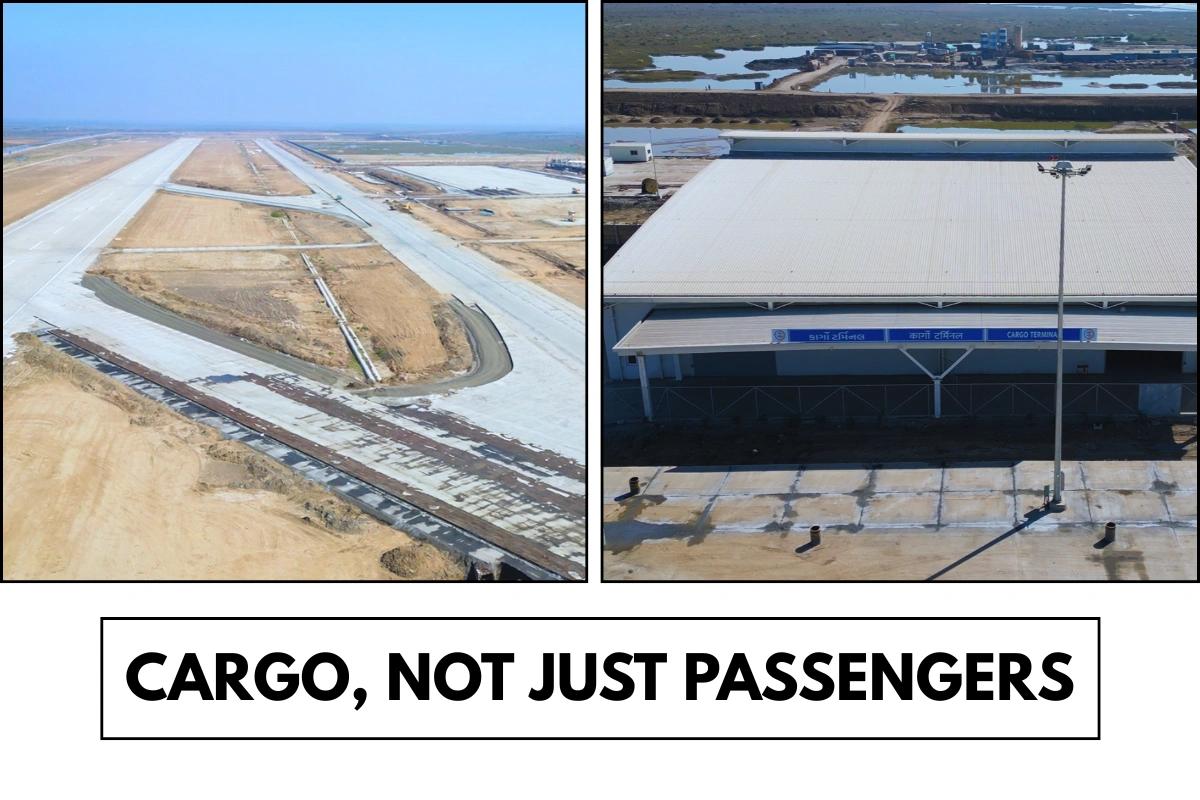
Dholera Airport is structured around cargo-led development, not passenger footfall. For modern manufacturing ecosystems, air cargo is crucial for moving high-value, time-sensitive goods.
Industries benefiting most from cargo-focused airports include
- Electronics and component manufacturing
- Semiconductor fabs and OSAT units
- Precision engineering and advanced machinery
Integrated connectivity with road, rail, and port infrastructure, anchored by the Ahmedabad-Dholera Expressway, strengthens Dholera’s position as an industrial cargo airport rather than a regional travel hub.
Supporting India’s Semiconductor & Advanced Manufacturing Push
Advanced manufacturing sectors such as semiconductors depend heavily on air connectivity. Equipment imports, sensitive components, and global supplier coordination require reliable logistics timelines.
Dholera’s industrial positioning makes an airport essential for:
- Semiconductor fabrication support industries
- OSAT and electronics manufacturing units
- Movement of time-critical machinery and tools
The airport enhances supply chain reliability and supports India’s broader push toward semiconductor manufacturing, complementing the Tata Semiconductor Plant in Assam and Dholera’s upcoming industrial ecosystem. Strategic alliances, including Tata–Intel collaborations and partnerships with PSMC (Taiwan), ROHM (Japan), and Tokyo Electron, further reinforce this ecosystem.
How Dholera Airport Differs from Other Regional Airports?
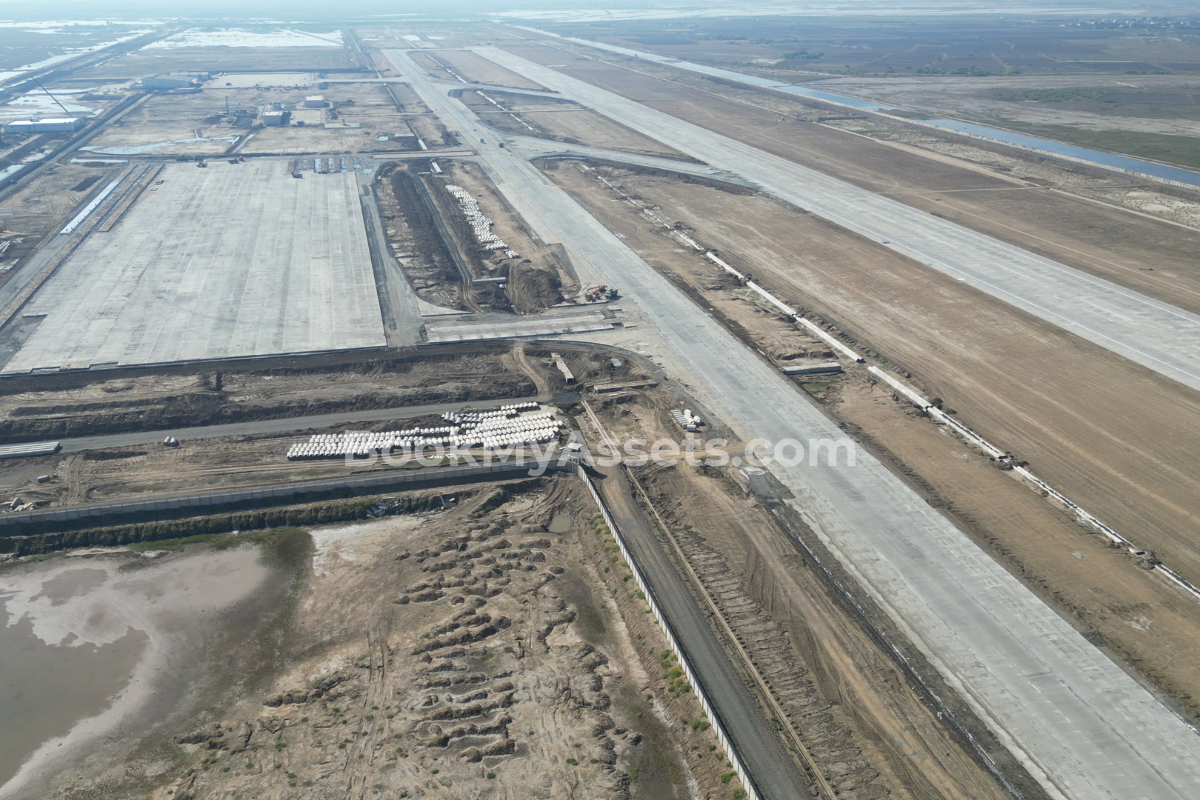
Most regional airports focus on improving passenger connectivity between cities. Dholera Airport serves a fundamentally different role.
Key differences include:
- Focus on industrial cargo rather than urban travel
- Long-term expansion scope due to land availability
- Controlled zoning within Dholera SIR
- Direct alignment with manufacturing clusters and smart city planning
This approach supports stable infrastructure-led growth and contributes to long-term clarity around land use, development potential, and Dholera Plot Price behavior over time.
Economic Impact Beyond Aviation
The influence of Dholera Airport extends well beyond aircraft operations. Cargo-oriented airports typically generate broader economic benefits earlier than passenger-centric hubs.
Expected impacts include:
- Job creation in logistics, warehousing, and maintenance
- Faster industrial occupancy in activation and surrounding zones
- Growth of support services and commercial infrastructure
- Improved competitiveness for export-oriented industries
These outcomes enhance confidence in property investment in India and land investment in India, while accelerating the emergence of upcoming cities in India, such as Dholera.
Timeline & Phased Development Outlook
Large-scale aviation infrastructure projects operate on extended timelines, aligned closely with industrial growth cycles.
Key phases include:
- Initial planning and land acquisition
- Phased runway and cargo terminal development
- Integration with industrial zones, activation areas, and utilities
- Gradual scale-up of cargo capacity as manufacturing demand rises
Dholera Airport follows a long-term development model, ensuring logistics readiness as industrial clusters mature.
Final Perspective
Dholera Airport is more than an aviation project-it is a strategic infrastructure decision tied to Gujarat’s industrial, logistics, and manufacturing future. With a cargo-first approach, strong surface connectivity via the Ahmedabad-Dholera Expressway, institutional planning through the ABCD Building Dholera, and alignment with activation areas inside Dholera SIR, the airport is positioned to become Gujarat’s next global gateway.
As infrastructure deepens and industrial momentum builds, Dholera Smart City is set to evolve into a high-tech manufacturing and logistics hub with national and global relevance.
Frequently Asked Questions
Q. Why is Dholera Airport called Gujarat’s next global gateway?
A. Dholera Airport is called Gujarat’s next global gateway because it is planned to connect future industries in Dholera Smart City with global markets through cargo-led aviation infrastructure.
Q. How is Dholera Airport different from other regional airports in Gujarat?
A. Dholera Airport is different because it is aligned more with industrial cargo, smart city planning, and manufacturing ecosystems rather than only city-to-city passenger travel.
Q. What are the upcoming mega projects in Dholera Smart City?
A. Dholera is home to many mega projects including the TATA Semiconductor Plant, Dholera International Airport, Ahmedabad-Dholera Expressway, and Dholera Solar Park by TATA Solar and Gujarat Govt.
Q. Can Dholera Airport affect plot prices and land demand near Dholera?
A. Yes, airport-led infrastructure can influence nearby land demand and Dholera plot price trends as logistics access, industrial activity, and development confidence grow over time
Q. What should buyers verify before investing in plots near Dholera Airport?
A. Buyers should verify title clarity, NA/NOC status, road connectivity, actual location, zoning relevance, and whether the plot is linked to practical growth corridors instead of only airport-based hype.


