Water Crisis or Water Smart? How Dholera Is Solving Gujarat’s Biggest Challenge

Key Highlights
Water is one of India’s most critical resources. With Gujarat and nearby regions facing a long-standing water crisis and recurring shortages across India, urban planning has evolved beyond just building homes. It now focuses on cities that anticipate future challenges and take proactive measures to prevent water crises and ensure long-term water security. Dholera Smart City stands out as a city designed from scratch with smart city water management and a sustainable water system, tackling the problems that many older cities are struggling to fix.
Gujarat’s Water Challenge - Why the Crisis Is Getting Serious
Water scarcity in Gujarat has become a daily reality, with many regions facing drinking water shortages and heavy dependence on rapidly depleting groundwater. Uneven rainfall, climate change, rising temperatures, population growth, urbanization, and industrial demand have intensified the crisis. Over 60% of groundwater resources are already utilized, while salinity and contamination affect several districts, especially in Kutch, Saurashtra, and North Gujarat. Despite initiatives like Sujalam Sufalam, water access remains seasonal and unreliable, reflecting a wider water crisis across India.
This is why Dholera Smart City water management is becoming an important model for sustainable urban planning.
The water scarcity issues in Gujarat highlight why city planning must consider water security as a core part of development. Unlike older cities, where infrastructure often reacts to crises, Dholera Smart City integrates water into its planning from the beginning, aiming to provide residents and businesses with a sustainable water system they can rely on for decades.
Rapid Urban Growth and Pressure on Limited Water Resources
India’s urban population is growing rapidly, and cities are struggling to keep up with the demand for housing, industrial facilities, and public services. In Gujarat, this surge has put urban water pressure on already stretched systems. Traditional water infrastructure, built decades ago, is no longer sufficient for modern demands, leading to frequent drinking water shortages in several districts. This is where Dholera Smart City water management stands out as a modern solution for handling future urban and industrial water needs.
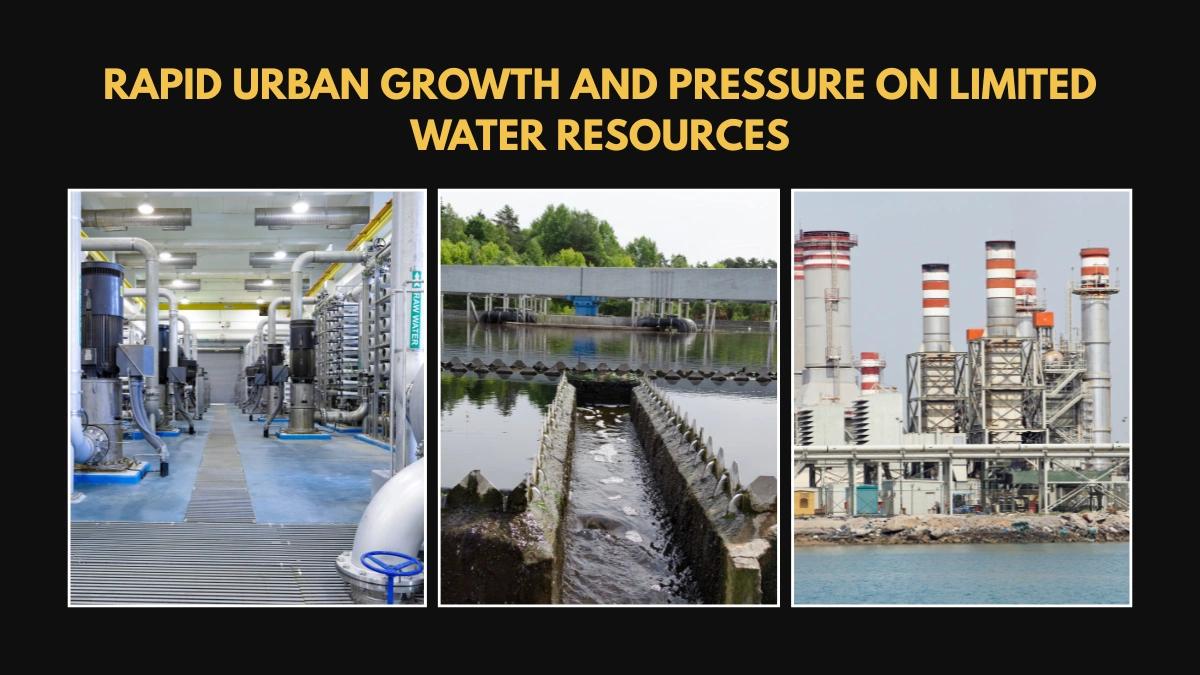
Key pressures include:
- A growing population and industrial activity are increasing water demand
- Inefficient or aging water distribution systems
- Overreliance on groundwater is causing further depletion
As cities expand, the cost of reactive planning rises. Without forward-looking strategies like those employed in Dholera, urban areas risk chronic water shortages in Gujarat, affecting residents’ quality of life and the long-term sustainability of local economies. By understanding these pressures, it becomes clear why Dholera Smart City water management and smart water management system design are essential for any new urban development.
For more detailed insights on Dholera projects, you can explore our blog section.
Uneven Rainfall and Overdependence on Groundwater
Another layer of complexity is rainfall variability. While some areas receive heavy monsoon rains, others may experience prolonged dry periods. This uneven rainfall in Gujarat makes water planning challenging and increases dependence on groundwater, which is already under stress.
Overuse of underground resources can lead to falling water tables, higher extraction costs, and deteriorating water quality. For sustainable development, it’s critical to implement integrated water management system practices that balance supply and demand. Dholera Smart City water management uses a combination of surface water supply, groundwater, and rainwater harvesting to create resilient systems that reduce water scarcity issues and improve access to drinking water even during dry spells.
How Dholera’s Water Planning Supports Gujarat’s Future Growth
Dholera Smart City has approached water planning differently. Its infrastructure is designed not only for today’s needs but also for future growth. Key elements include:
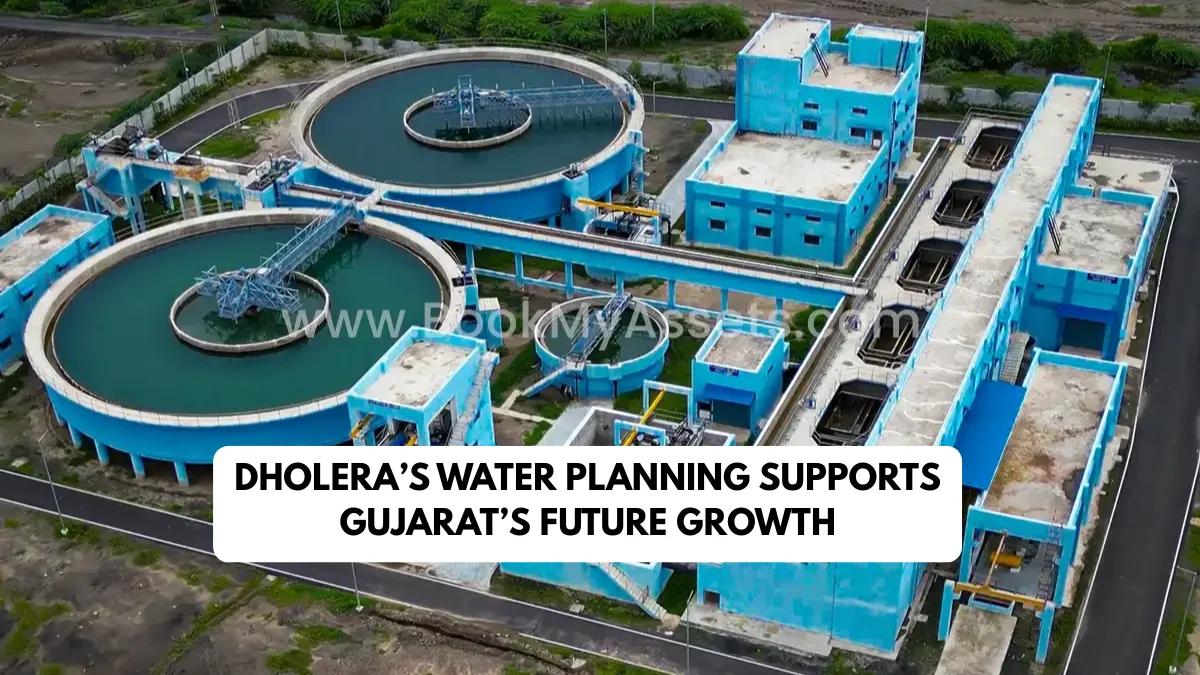
1. Dedicated Water Treatment Plant (WTP)
- Treats surface water for safe residential and industrial use (water treatment plant)
- Reduces dependence on over-exploited groundwater
- Scales' capacity as the city grows
2. Surface Water Supply
- Prioritizes sustainable sources over borewells
- Ensures equitable water distribution across neighborhoods
3. Smart Water Management System
- Monitors water usage in real-time
- Detects leaks and inefficiencies
- Optimizes distribution for residential, commercial, and industrial zones
4. Integrated Dholera Smart City Water Management with Rainwater Harvesting
- Captures seasonal rainfall for reuse (rainwater harvesting benefits)
- Coordinates treatment, storage, and distribution (integrated water management system)
- Contributes to a sustainable water system
5. Planning for Future Growth
- Infrastructure designed for the projected population and industrial demand
- Follows sustainable city design principles
- Provides a reliable framework for investors, residents, and industries
By combining technology, sustainable practices, and long-term planning, Dholera ensures that water is not just available today but will continue to be reliable decades from now. This approach is a blueprint for Dholera Smart City progress and demonstrates the city’s commitment to being water-smart from day one.
What This Means for Property Buyers & Long-Term Investors
Water infrastructure isn’t just about pipes and treatment plants; it directly affects property value and investment decisions. In Dholera:
- Long-term water security increases confidence for homeowners and businesses
- Access to a sustainable water system ensures an uninterrupted supply even during dry periods
- Planned and efficient smart city infrastructure boosts liveability and makes properties more attractive to investors
Investors and buyers can feel assured that the city’s water systems are designed with foresight, making surface water supply and other smart water management system initiatives a key factor in their decision-making.
Dholera Is Not Facing a Water Crisis - It is Building a Water-Smart Model
Unlike other cities struggling with water shortages in India, Dholera is proactive. Through smart city water management, integrated water management, and rainwater harvesting benefits, the city ensures reliable access for residents and industries. Its design prioritizes efficiency, sustainability, and resilience.
Dholera isn’t just avoiding a crisis; it’s demonstrating how sustainable city design can balance growth with natural resource management. Through Dholera Smart City water management the city addresses challenges upfront and sets a model for the next generation of smart cities across India.
Frequently Asked Questions
Q. Is water availability a serious issue in Gujarat today?
A. Yes. Many parts of Gujarat face seasonal shortages, groundwater dependence, and uneven rainfall, making water planning important for future development.
Q. How is Dholera handling the water challenge differently?
A. Dholera is planned with water infrastructure from the start, including treatment, storage, distribution, and monitoring systems.
Q. Why is Dholera’s smart water system important?
A. It helps monitor usage, detect leaks, and improve water distribution across residential, commercial, and industrial areas.
Q. Why does water infrastructure matter when buying property in Dholera?
A. Reliable water supply supports long-term liveability, buyer confidence, and future property demand.
Q. Can smart water management support property value in Dholera?
A. Yes. Planned utilities and dependable water systems can make Dholera more attractive for homeowners, businesses, and investors.


