How the Tata Nano Singur Controversy Led to the SIR Act and Why Tata Semiconductor Chose Dholera SIR

Key Highlights
Two Different Stories of Industrial Development
The Tata Nano Singur controversy stands as a watershed moment in India's industrial journey - a painful lesson that ultimately shaped how the nation approaches large-scale manufacturing projects today. What began with hope and ambition in West Bengal ended in disruption and loss, forcing one of India's largest conglomerates to relocate overnight. Yet from this crisis emerged a powerful solution: the SIR Act, a legal framework that has made Dholera SIR the safest, most attractive destination for industrial investment in India.
This case study explores how the absence of structured legal protection in Singur created chaos for Tata Motors, and how the presence of the SIR Act in Dholera now guarantees security for major industries like Tata Semiconductor. It's India's learning journey from industrial instability to industrial excellence.
The Singur Crisis: When Industrial Growth Lacked a Legal Framework
The Initial Vision (2006)
In 2006, Ratan Tata announced the Tata Nano project - an ambitious plan to manufacture the world's most affordable car. West Bengal, eager to revive its stagnant industrial sector, offered 1,000 acres in Singur for the manufacturing plant. For a state that had seen decades of industrial decline, this represented hope for economic revival and thousands of jobs.
The initial excitement was palpable. Local businesses anticipated growth, youth hoped for employment, and the government projected Singur as a model for future industrial development in India.
The Core Problem: Absence of a Structured Legal Framework
The fundamental issue at Singur wasn't just about land acquisition-it was about the complete absence of a protective legal framework for industrial projects. Unlike today's Dholera SIR, which operates under the comprehensive SIR Act, Singur had no structured system to manage such large-scale industrial development.
There was no industrial protection law to safeguard long-term investments. The land acquisition process was hurried and lacked the transparency that modern frameworks like land pooling provide. No dedicated authority existed to manage infrastructure, rehabilitation, or community participation. Most critically, there was no legal mechanism to ensure policy stability or protect industries from sudden political disruptions.
This regulatory vacuum created vulnerability for both the local community and Tata Motors - a recipe for disaster.
The Escalation
As concerns about land acquisition grew, protests intensified. Farmers who felt inadequately compensated joined forces with political movements. What started as a local issue quickly became a statewide agitation with hunger strikes, rallies, and road blockades.
Without a legal framework like the SIR Act to provide clear dispute resolution mechanisms, the situation spiraled. Industrial operations faced continuous disruptions. Construction work was repeatedly halted. The lack of legal safeguards meant neither farmers nor Tata Motors had clear rights or protection.
The absence of transparent governance mechanisms that characterize regions like Dholera Smart City meant trust eroded rapidly on all sides.
The Painful Exit (2008)
By late 2008, the situation became untenable. Faced with mounting protests, operational disruptions, and safety concerns, Tata Motors made the painful decision to exit Singur. The company was forced to relocate to Sanand, Gujarat virtually overnight.
The consequences were devastating:
- Estimated losses exceeded ₹1,500 crore
- Over two years of progress lost
- Complex equipment relocation challenges
- The entire supply chain is disrupted
- Workers displaced and compensated
- Market momentum is completely lost
The Tata Motors Sanand plant eventually succeeded, but the Singur experience left scars. It exposed how vulnerable industries are without legal protection a lesson that would reshape India's approach to industrial policy.
Singur taught India a crucial lesson: industrial development needs legal protection, not just for farmers, but also for industries making long-term investments. Without a robust framework, billions of rupees and years of effort can vanish overnight due to policy instability.
The Birth of the SIR Act: India's Solution to Industrial Instability
Gujarat's Visionary Response
Learning from the Singur crisis, Gujarat introduced a revolutionary solution: the Special Investment Region (SIR) Act. This wasn't just another policy - it was a comprehensive legal framework designed to create win-win outcomes for industries, communities, and the government. The SIR Act addressed every failure point that Singur exposed, creating a model that would attract major investments while ensuring community welfare and environmental sustainability.
What Makes SIR Act Revolutionary
- Legal Protection for Industries: The SIR Act provides long-term investment security through legally binding commitments. Industries operating under this framework are protected from arbitrary policy changes, political disruptions, and sudden regulatory shifts, exactly what Tata Motors lacked in Singur.
- Transparent Land Pooling: Instead of forced acquisition, the SIR model emphasizes voluntary land pooling with fair compensation. This approach builds trust and ensures community participation from day one, preventing the conflicts that plagued Singur.
- Dedicated Authorities: Professional Special Purpose Vehicles like DSIRDA (Dholera SIR Development Authority) manage planning, infrastructure development, and execution. This ensures professional governance rather than ad-hoc political management.
- Master Planning: Under the SIR Act, entire industrial zones are pre-planned with plug-and-play infrastructure. Industries don't need to build basic utilities; they arrive at ready facilities, drastically reducing setup time and costs.
- Regulatory Stability: The Act guarantees policy consistency for 30+ years, giving industries the confidence to make billion-dollar investments without fear of overnight relocations.
The Core Difference
Singur operated without a legal framework, creating industry vulnerability. Dholera SIR operates under strong SIR Act protection, creating industry confidence. This single difference explains why Tata Semiconductor chose Dholera while Tata Motors fled Singur.
Dholera SIR: Where Tata and Other Industries Are Truly Protected
Why Tata Semiconductor Chose Dholera?
When Tata Group planned its semiconductor manufacturing facility, a multi-billion-dollar investment requiring decades of stable operations, it chose Dholera SIR. The decision wasn't random; it reflected lessons learned from Singur.
Dholera offers guaranteed legal protection under the SIR Act, ensuring zero risk of sudden displacement. Clear, unchangeable land rights provide certainty. The stable regulatory environment eliminates the policy surprises that devastated the Nano project. Most importantly, the comprehensive legal framework means Tata's massive investment is protected by law, not just political promises.
The Dholera Advantage
- Legal Certainty: The SIR Act ensures no political interference can disrupt operations. Unlike Singur, where protests could halt work indefinitely, Dholera Industrial Area operates under legal protections that guarantee continuity.
- Plug-and-Play Infrastructure: Industries arrive at pre-built roads, power supply, water systems, and telecommunications. This infrastructure-ready approach saves years of setup time.
- Long-term Policy Stability: With a 30+ year development vision backed by law, industries can plan confidently without fear of regulatory upheavals.
- World-Class Connectivity: The upcoming Dholera International Airport and operational Ahmedabad-Dholera Expressway provide seamless logistics critical for manufacturing competitiveness.
- Professional Governance: DSIRDA's dedicated management ensures efficient approvals, infrastructure maintenance, and problem resolution a stark contrast to Singur's administrative chaos.
- Complete Ecosystem: The Dholera smart city project includes residential zones, commercial areas, and supplier clusters, creating a self-sustaining industrial ecosystem.
Current Industrial Success
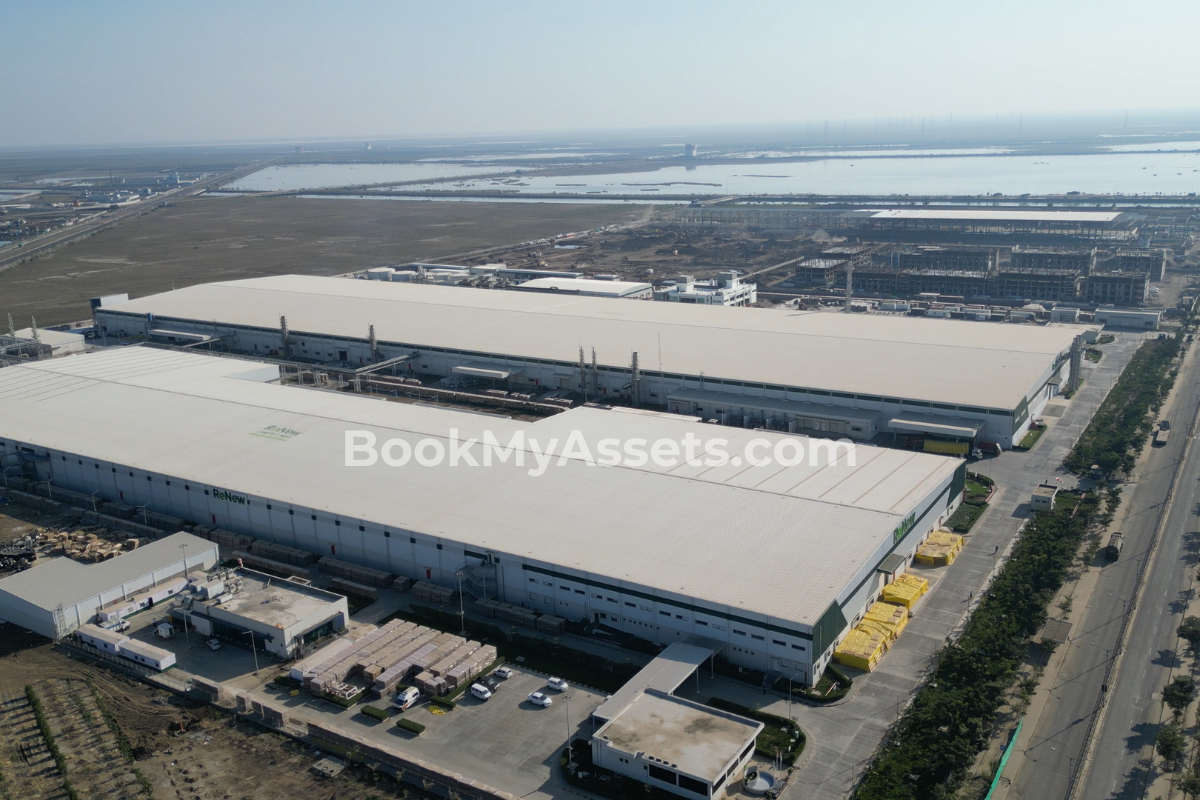
Today, Tata Semiconductor's facility in Dholera represents what Singur could never achieve. Multiple industries are investing confidently in Dholera plots. There are no disruptions, no protests, no overnight evacuation orders. Smooth operations are guaranteed by law the very protection absent in Singur.
The DMIC corridor, with Dholera as its flagship, demonstrates how structured legal frameworks transform industrial investment in India.
Comparative Analysis: Singur vs. Dholera
The contrast between Singur and Dholera illuminates why legal frameworks matter:
| Aspect | Singur (No SIR Act) | Dholera (With SIR Act) |
|---|---|---|
| Legal Framework | Absent | Strong SIR Act protection |
| Land Process | Forced acquisition | Voluntary land pooling |
| Industry Security | Zero – overnight shift forced | Complete legal protection |
| Policy Stability | Political interference | Regulatory certainty |
| Infrastructure | Unplanned | Master-planned, ready |
| Governance | Ad-hoc | Professional SPV (DSIRDA) |
| Community Relation | Conflict | Partnership model |
| Investment Risk | High – as Tata experienced | Minimal – legally secured |
The Singur Lesson: Why Industries Need Legal Protection
The Tata Nano Singur controversy inflicted massive damage, estimated losses exceeded ₹1,500 crore, two years of setbacks, equipment damage during rushed relocation, lost market opportunities, worker compensation costs, and complete supply chain rebuilding.
But the deeper cost was strategic: it demonstrated that without legal protection, even India's largest corporations aren't safe from disruption.
If Singur had SIR Act-like protection, Tata would never have faced forced overnight relocation. The legal framework would have provided dispute resolution mechanisms, clear rights for all stakeholders, and protection from political interference. The Nano project might have succeeded, and West Bengal might today boast a thriving automotive hub.
Dholera's Promise: India's Model for Industrial Security
- How the SIR Act Protects Every Industry:
The SIR Act provides legal immunity from arbitrary policy changes, guaranteed operational continuity, protection from political disruptions, and long-term investment security. These aren't just promises - they're legally enforceable rights.
- Beyond Tata: The Ecosystem Effect
Dholera's success extends beyond Tata Semiconductor. Multiple industries are choosing Dholera confidently. Suppliers are establishing ancillary units. Residential and commercial development is creating India's first truly protected industrial city, a complete ecosystem that Singur could never build.
This is sustainable infrastructure development at scale, representing one of the most significant investment opportunities in India.
- The DMIC Corridor Vision:
As the flagship of the Delhi-Mumbai Industrial Corridor, Dholera SIR represents a replicable model. The success here proves that proper legal frameworks can attract massive industrial investment while ensuring community welfare. It's future-ready industrial development that positions India as a global manufacturing hub.
Gujarat's Industrial policy, anchored by the SIR Act, has made regions like Dholera Smart City among the most attractive upcoming cities in India for industrial investment.
From Singur's Pain to Dholera's Gain
The journey from Singur to Dholera tells the story of India's industrial maturation. Singur's crisis created India's solution: the SIR Act. This crisis taught policymakers that industries need legal protection just as much as farmers do that sustainable development requires frameworks protecting all stakeholders. Dholera SIR represents industrial development done right. Tata Semiconductor's choice validates this model. The SIR Act demonstrates that India has learned to protect both communities and industries, creating environments where billion-dollar investments can flourish without fear.
Where Singur forced Tata to flee overnight, Dholera SIR welcomes industries with legal certainty, world-class infrastructure, and a 30-year vision. This is India's evolution from industrial instability to industrial excellence - a transformation that positions the nation as a premier destination for manufacturing investment in the 21st century.
Frequently Asked Questions
Q. What was the Tata Nano Singur controversy?
A. The Tata Nano Singur controversy began when Tata Motors planned its Nano plant in Singur in 2006, but the project faced strong protests over land acquisition and eventually shifted out of West Bengal in 2008.
Q. What is the SIR Act and why is it important for Dholera SIR?
A. The SIR Act is the legal framework that supports large-scale, planned industrial development in regions like Dholera SIR by providing structured governance, land planning, infrastructure execution, and long-term regulatory stability.
Q. What was the biggest lesson from the Singur case for industrial development?
A. The biggest lesson was that large industrial projects need a strong legal framework, policy stability, transparent land processes, and dispute-resolution mechanisms to protect both communities and investors.
Q. What role does DSIRDA play in Dholera SIR?
A. DSIRDA acts as the dedicated authority for planning, infrastructure development, approvals, and execution in Dholera SIR, helping create more professional and stable industrial governance.
Q. What should buyers and investors understand before choosing land near Dholera SIR?
A. Buyers and investors should understand the legal framework, land status, planning authority, location relevance, and infrastructure linkage before making a decision near Dholera SIR, especially when the investment story is tied to long-term industrial growth.


